Pressure Sustaining Valves (Back Pressure Regulators)
A pressure sustaining valve, also known as a back pressure regulator or back pressure valve, holds the pressure upstream of the valve at a set minimum, regardless of demand downstream. It stays closed until upstream pressure reaches the set point, then opens just enough to pass excess flow while maintaining that pressure.
We supply Z-Tide pressure sustaining valves in direct-acting and pilot-operated designs for liquids, gases and steam, from micro-pressure applications to 12″ pilot-operated valves for high-flow water service.
Our Pressure Sustaining Valves
P04 Pilot Operated for Liquids
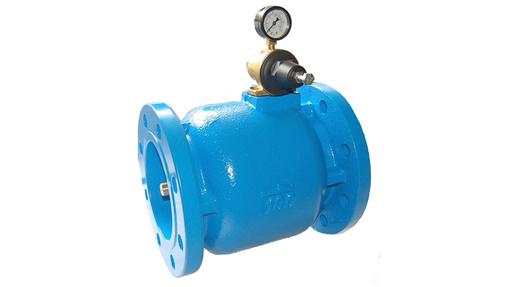
P09 Direct Acting Back Pressure Valves for Liquids and Gases
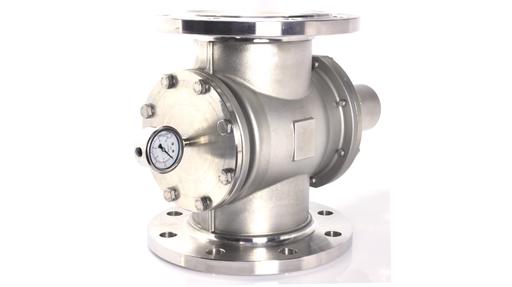
P26 Direct Acting Low Pressure Valves for Liquids or Gases
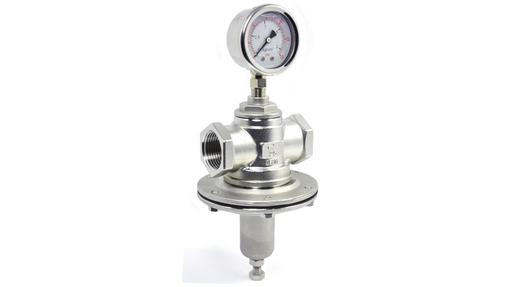
P43 Direct Acting Micro Pressure Valves for Liquids or Gases
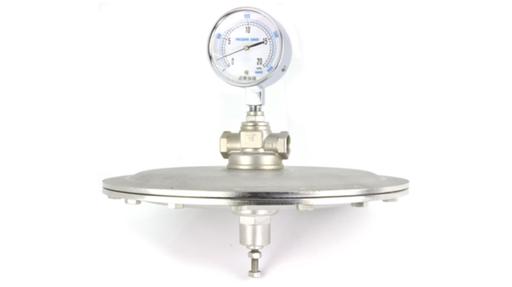
What does a pressure sustaining valve do?
A pressure sustaining valve protects the part of a system upstream of it. If a large demand opens up downstream, the valve throttles to stop upstream pressure falling below its set point, so upstream processes, equipment or supply zones are never starved of pressure. It is normally closed and opens progressively as upstream pressure rises above the set point.
Pressure sustaining valve vs pressure reducing valve
The two are easily confused because they can look identical. A pressure reducing valve controls downstream pressure: it is normally open and closes as outlet pressure rises. A pressure sustaining valve controls upstream pressure: it is normally closed and opens as inlet pressure rises. Specifying the wrong one means controlling the wrong side of the valve.
Direct-acting or pilot-operated?
Direct-acting valves use a spring working against a piston or diaphragm that senses inlet pressure directly. They are simple, compact and responsive, and suit smaller line sizes and lower flows. Pilot-operated valves use a small pilot to sense upstream pressure and control a larger main valve, giving tighter control across a wide flow range. They are the usual choice for large-bore water systems.
Where pressure sustaining valves are used
Common applications include maintaining priority supply to upstream users or elevated zones when demand surges downstream; holding back pressure on a pump so it doesn't run out on its curve and cavitate, particularly when filling empty pipework; relieving excess flow on a bypass line to protect a pump against dead-heading; maintaining system pressure while filters backwash; balancing pressures in ring mains and parallel pump systems; and holding pressure in vessels and process lines for gases.
How to select a pressure sustaining valve
Start with the set pressure you need to hold and confirm it sits comfortably within the valve's adjustable range. Then consider flow rate and Kv, line size and connection (BSP threaded or PN16 flanged), media and temperature (seal materials for steam or aggressive fluids), and body material. For water distribution at larger sizes, a pilot-operated valve is typically the better fit; for process, gas and smaller lines, a direct-acting valve is usually simpler and more economical.
FAQS
What's the difference between a pressure sustaining valve and a back pressure regulator?
+Is a pressure sustaining valve normally open or closed?
+Can a pressure sustaining valve be used as a pressure relief valve?
+Where should a pressure sustaining valve be installed?
+Can pressure sustaining valves be used on gas or steam?
+Not sure which valve or measurement solution is best?
Use our experience to guide you...
For a deeper understanding of which valve or instrument would be best for you please call or email us now so that we can save you time and ensure you can make a truly objective decision for your company.
Get in Touch
sales@measuremonitorcontrol.com
+44 (0) 1443 772500 / 02922 780798
Red Dragon Limited T/A
Measure Monitor Control
Unit 15 Abergorki Industrial
Estate
Ynyswen Road
Treorchy
South Wales
CF42 6DL
United Kingdom
EORI: GB791056521000
Got a Question?
Need assistance with a product or an enquiry? Fill in the form below and we will get in touch with you as soon as possible: