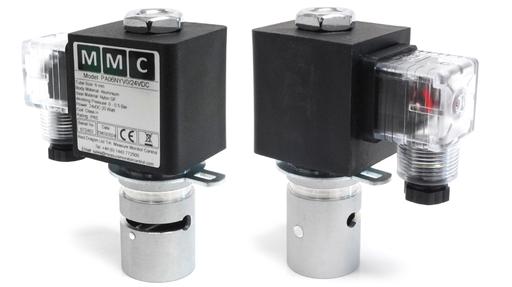
Pinch valves occupy a niche that most other valve technologies struggle to fill. When the process fluid is abrasive, corrosive, laden with solids, or must remain entirely free from contact with metal surfaces, the design constraints that make a pinch valve look simple on paper become genuine engineering advantages. The sleeve is the only component that touches the media. Everything else, the body, the actuator, the end connections, remains isolated from what flows through the pipe.
That single characteristic drives the entire case for pinch valves, and shapes how they are specified, selected, and maintained.
This guide covers how pinch valves work, the main types and actuation methods, sleeve materials and their compatibility, proportional flow control variants, selection criteria, and the applications where the pinch valve is the right tool.
How a Pinch Valve Works
A pinch valve consists of three principal components: a body or housing, a flexible elastomeric sleeve, and end connections. The sleeve runs through the body from inlet to outlet and forms the only flow path for the process medium. When the valve closes, a mechanical or fluid force compresses the sleeve across its midpoint, collapsing it and stopping flow. When the force is removed, the elasticity of the sleeve returns it to its open, full-bore position.
This is fundamentally different from every other valve technology. A ball valve rotates a solid element through the flow path. A gate valve moves a disc perpendicular to the flow. A solenoid valve opens and closes a seat. In each case, the closure element interacts directly with the process fluid. In a pinch valve, the closure element acts on the outside of the sleeve and never contacts the media at all.
The open position is a full-bore straight-through passage with no internal restrictions, steps, pockets, or obstructions. This means no turbulence, no areas where solids can accumulate, and minimal pressure drop compared to valves that introduce a restriction or change of direction in the flow path.
Types of Pinch Valve by Actuation
Pneumatic pinch valves
Pneumatic pinch valves are the most widely used type in industrial process applications. Compressed air is introduced into the body cavity surrounding the sleeve. As air pressure builds in the cavity, it compresses the sleeve from all sides simultaneously, collapsing it uniformly rather than pinching from one side only. This even compression distributes wear across the sleeve surface and reduces the stress concentration that single-sided pinching creates.
Opening is passive: when the compressed air supply is vented, the inherent elasticity of the sleeve, combined with the pressure of the incoming process fluid, re-opens the flow path. Pneumatic pinch valves are therefore normally-open designs in their base form, requiring air to close.
Discover our pneumatic valve range and the guide to compressed air preparation.
Mechanical pinch valves
Mechanical pinch valves use a handwheel, crank, or gearbox to drive a stem that forces one or two pinch bars against the sleeve. They are multi-turn designs, requiring multiple rotations of the handwheel to move from fully open to fully closed. They are suited to duties where manual operation is preferred and where independence from utility supplies is an advantage. A key limitation is that they pinch the sleeve from one side only, creating a non-uniform compression profile that concentrates stress at the contact points and reduces sleeve life compared to pneumatic designs on equivalent duties.
Proportional pinch valves
Kao Lu CPV and PPV series proportional pinch valves, available from Measure Monitor Control, are designed for precision applications including medical equipment such as respirators and anaesthesia devices, pharmaceutical equipment, laboratory instruments, and industrial processes requiring accurate metered flow of aggressive or sensitive media.
Sleeve Materials: The Critical Selection
Because the sleeve is the only component in contact with the process medium, sleeve material selection is the most important engineering decision in pinch valve specification. Body and housing materials do not require chemical compatibility with the fluid; the sleeve must provide it entirely.
- Natural rubber provides excellent abrasion resistance and flexibility. It is the standard choice for highly abrasive slurries including sand, gravel, cement, mineral concentrates, and foundry materials. Food-grade natural rubber formulations are available for potable water and certain food contact duties. Natural rubber is limited in temperature range and should not be used with oils, solvents, or oxidising media.
- EPDM offers good resistance to dilute acids and alkalis, hot water, and steam. It is well suited to food and beverage applications and CIP duties where elevated temperatures and cleaning chemicals are used. Not suitable for oils, hydrocarbons, or solvents.
- NBR (nitrile rubber) is the preferred choice for media containing oils, fats, or hydrocarbons. Used in food applications involving animal fats, dairy products, chocolate, and vegetable oils, and in industrial applications involving mineral oils and fuels.
- Neoprene provides moderate resistance to oils, dilute solvents, and mild chemicals. A general-purpose option where neither pure oil resistance nor maximum abrasion resistance is the primary requirement.
- FKM (Viton) provides resistance to solvents, petrochemicals, and aromatic hydrocarbons, and operates across a higher temperature range than most other elastomers. Specified for chemically aggressive duties where EPDM and NBR are insufficient.
- Silicone is used in high-temperature applications and in medical and pharmaceutical duties where biocompatibility is required. Not abrasion resistant and not suitable for oils or hydrocarbons.
- PTFE-lined sleeves are available for highly aggressive chemical duties. PTFE provides near-universal chemical resistance but has more limited flexibility, making it more suited to on/off duties than high-cycle throttling applications.
Sleeves are fabric-reinforced to improve pressure ratings and extend service life. The reinforcement fabric, typically nylon or polyester, does not contact the process fluid but contributes significantly to mechanical performance under pressure cycling.
EC Regulation 1935/2004 on materials intended to contact food, and with FDA 21 CFR requirements where applicable.
Pressure and Temperature Limits
Pressure. The sleeve is the pressure-limiting component, not the body. For pneumatic pinch valves, the compressed air pressure in the body cavity must exceed the line pressure to close the sleeve. Maximum allowable operating pressure is typically 6 to 10 bar for standard designs, with reinforced sleeves extending this in some configurations.
Temperature. Natural rubber and NBR are generally limited to around 80°C. EPDM extends to approximately 120°C for hot water and steam duties. Silicone and FKM cover higher temperatures. Operating above the sleeve temperature rating results in accelerated degradation and significantly reduced service life.
Vacuum. Most elastomeric sleeves will collapse inward under vacuum conditions, blocking flow. Pinch valves are not suitable for vacuum service unless the sleeve is specifically reinforced for this duty.
Pinch Valves Compared to Other Valve Types
solenoid valves for on/off control, and actuated control valves for throttling duties. The pinch valve is usually preferred in the following conditions.
Abrasive media. Solenoid valves and conventional control valves have internal seats and orifices that abrasive slurries erode rapidly. The pinch valve sleeve absorbs abrasive impacts elastically, deflecting energy rather than accumulating wear on a hard seat. Sleeve replacement, when necessary, is a straightforward maintenance task that does not require replacing the valve body or actuator.
Particle-laden flows. Conventional valves trap particles around the closure element, causing jamming and incomplete closure. The pinch valve closes around particles, trapping them momentarily and releasing them as the sleeve re-opens. The full-bore open position clears residual particles without restriction.
Hygiene and contamination prevention. In food, pharmaceutical, and laboratory applications, the all-elastomer internal surface of the pinch valve sleeve, with no cavities, pockets, or metal surfaces in the flow path, provides the cleanest possible internal geometry.
Chemical isolation. Where the process medium is corrosive to metals, only the sleeve material needs to provide chemical resistance. The body does not require compatibility with the fluid, which is typically less costly than specifying a fully corrosion-resistant metal valve.
Pinch Valves for Throttling and Proportional Control
Pinch valves are effective throttling devices across their mid-range. The effective throttling range for a standard pinch valve is typically between 10% and 95% of rated flow. At very low openings, flow control becomes imprecise because small changes in sleeve position produce disproportionate changes in flow rate.
CPV series compact proportional pinch valves and PPV series proportional pinch valves provide electronically controlled positioning with repeatable, accurate flow modulation. These are designed specifically for the small-bore, precision-control duties found in medical devices, analytical instruments, and pharmaceutical production, where the combination of chemical isolation, sanitary flow path, and electronic control is required in a single compact component.
Selection Criteria
- Sleeve material - The starting point. Identify the process medium and any secondary fluids such as cleaning agents, and select a sleeve material providing compatibility across all of them. Where food or pharmaceutical contact is involved, confirm regulatory compliance.
- Actuation method - Pneumatic for automated industrial duties; mechanical for manual operation where utility supplies are unavailable; solenoid for small-bore electrically-controlled duties; proportional for electronically modulated flow control in precision applications.
- Operating pressure - Confirm that the sleeve pressure rating exceeds the maximum process pressure. For pneumatic pinch valves, confirm that the compressed air supply pressure is sufficient to close the sleeve against maximum line pressure.
- Temperature - Confirm that the sleeve temperature rating covers the full operating range including any transient peaks during start-up, cleaning, or process upsets.
- Pipe size and connection - Pinch valves are available in threaded and flanged end connections. Confirm the pipe bore and connection standard.
- Regulatory requirements - For food contact, drinking water, or hazardous area applications, confirm that sleeve materials and any electrical components carry the necessary certifications. For hazardous area installations requiring ATEX-certified actuation components, see the Measure Monitor Control ATEX resource or view our selection of ATEX valves.